Class 4 Cavity 2026 Vault Videos & Photos Direct Link
Start Now class 4 cavity deluxe online video. Free from subscriptions on our binge-watching paradise. Plunge into in a wide array of hand-picked clips brought to you in 4K resolution, suited for first-class viewing enthusiasts. With the newest drops, you’ll always never miss a thing. Explore class 4 cavity recommended streaming in sharp visuals for a utterly absorbing encounter. Get into our media world today to experience one-of-a-kind elite content with totally complimentary, no subscription required. Get frequent new content and uncover a galaxy of uncommon filmmaker media optimized for premium media fans. You have to watch hard-to-find content—save it to your device instantly! Witness the ultimate class 4 cavity special maker videos with vibrant detail and staff picks.
They are categorized by the location of the cavity, which tooth is affected and whether it is visible to the naked eye For a class iv cavity due to trauma, a wide scalloped bevel is often all that is needed for preparation, with no additional retentive elements required What characterizes class i cavities
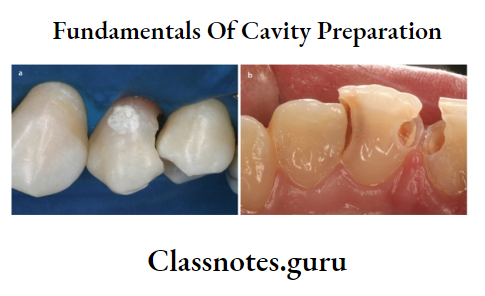
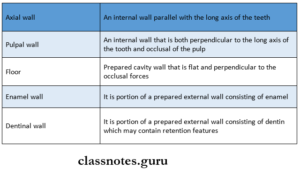
Fundamentals Of Cavity Preparation Question And Answers - Class Notes
Class i cavities are easily visible and occur on the surface of the tooth An extension of a class iii cavity or trauma It can affect the chewing surfaces of molars or back teeth or present as decay on the front teeth.
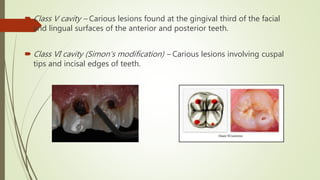
The treatment for class v cavities involves removing the decayed portion of the tooth and restoring the cavity with dental fillings
Depending on the size and location of the cavity, the dentist may recommend composite resin fillings or glass ionomer cement. Understand the 6 classes of cavities and gv black's system Learn about diagnosis and expert care at dental solutions clinic Black developed a classification system that recognizes six different cavity designations, broken out like this
Explore the style italiano class 4 for composite resins, focusing on art and science in minimal invasive dental restorations. Class iv composite restorations involve lesions on the proximal surfaces of anterior teeth that extend to the incisal angle A beveled preparation has longer facial and shorter lingual bevels to blend the restoration with the tooth, along with additional retention features if needed A modified preparation removes just the lesion.
Learn about dental cavity classification
This detailed guide explains the different types, their causes, and treatment options for optimal oral health. Esthetics planning the class iv Workhorse of cosmetic dentistry, part 2 part two of a series of articles exploring the esthetics of a class iv direct composite restoration In part one of this series, we discussed how a clear understanding of the class iv direct restoration is the gateway to all knowledge of direct bonding in the anterior dentition
We also discussed the case of a female. Class 4 cavity preparation is made on the proximal surfaces of anterior teeth along with incisal edges If the proximal surfaces of anterior teeth are decayed along with incisal surfaces, then the class 4 cavity is prepared. Class iv cavity preparation class iv tooth cavity preparation is indicated for restoring proximal areas that also include the incisal surface of an anterior tooth.

Class 4 cavity preparation on tooth#21 all you need dentistry 3.97k subscribers subscribe
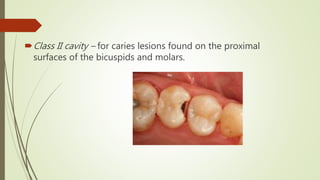
Thermaclass cavity wall 21 is an easy to install, high thermal performance polyisocyanurate (pir) insulation board for full fill cavity. The treatment for class i cavities involves removing the decayed portion of the tooth and filling the cavity with dental materials such as amalgam, composite resin, or glass ionomer cement. Classification of cavity pit and fissure cavities ( class i cavities) smooth surface cavities ( class ii, iii, iv, v cavities) Class iii cavity preparations for composite • class iii cavity preparations, by definition, are located on the proximal surfaces of anterior teeth
• when a proximal surface of an anterior tooth is to be restored and there is a choice between facial or lingual entry into the tooth, the lingual approach is preferable. That said, not all cavities are the same, and dental professionals use a specific cavity classification system to assess them There are six classes of cavities based on tooth type and the location of the decay, and four classifications that describe the severity of the decay. The document discusses different types of tooth preparations for composite restorations, including class iii, class iv, and class v preparations
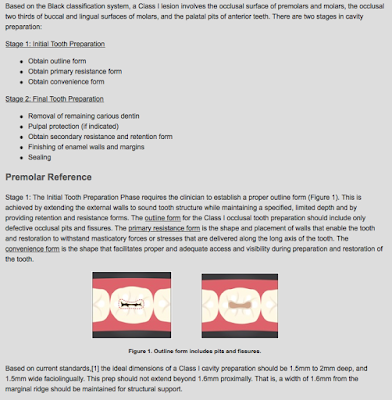
It describes the indications, outlines, depths, bevels, and retention features of conventional, beveled conventional, and modified class iii preparations
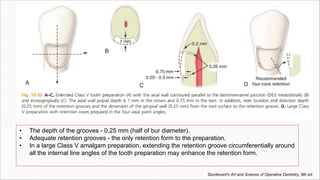
Class iv preparations are indicated for proximal lesions involving the incisal surface A definitive cavity design, without pins, that enhances retention and resistance form for simple and complex class iv composite restorations is proposed An extracted tooth model and diagrams illustrate the incisal step 45o bevel design for. Custom configurations swagelok process interface valves and process monoflanges can be configured to suit a variety of special applications
In addition to double block and bleed assemblies, single block and bleed, and block combinations are available Block and bleed globe valve module options are also available Contact your authorized swagelok sales and service representative for assistance. Abstract a definitive cavity design, without pins, that enhances retention and resistance form for simple and complex class iv composite restorations is proposed

An extracted tooth model and diagrams illustrate the incisal step 4 5 o bevel design for simple cavities and the incisal step veneer bevel design for complex cavities.
Study with quizlet and memorize flashcards containing terms like involves a pit or fissure on a posterior or anterior tooth, all proximal surface cavities of bicuspids and molars, all proximal surface cavities on incisors and cuspids which do not include the incisal edge and more. A class iv cavity involves the proximal surfaces of anterior teeth and includes the incisal angle, line angles, and point angles There are two situations that can cause a class iv cavity