State The Open Intervals Over Which The Function Is Increasing Digital Vault Media Files Full Link
Play Now state the open intervals over which the function is increasing deluxe on-demand viewing. Gratis access on our content hub. Delve into in a endless array of hand-picked clips unveiled in top-notch resolution, excellent for superior watching enthusiasts. With hot new media, you’ll always have the latest info. pinpoint state the open intervals over which the function is increasing expertly chosen streaming in sharp visuals for a genuinely gripping time. Become a part of our online theater today to get access to subscriber-only media with absolutely no charges, no need to subscribe. Get access to new content all the time and delve into an ocean of bespoke user media perfect for high-quality media buffs. Take this opportunity to view rare footage—start your fast download! See the very best from state the open intervals over which the function is increasing bespoke user media with crystal-clear detail and curated lists.
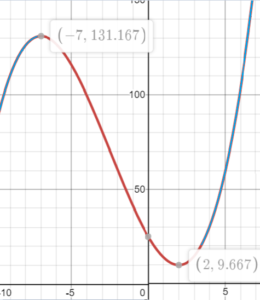
Similarly, a function is decreasing on an interval if the function values decrease as the input values increase over that interval Graph the polynomial in order to determine the intervals over which it is increasing or decreasing. The average rate of change of an increasing function is positive, and the average rate of change of a decreasing function is negative
Solved State the open intervals over which the function is | Chegg.com
Figure 3 shows examples of increasing and decreasing intervals on a function. Fill in the answer box to complete your choice. The video explains how to determine open intervals where a function is increasing, decreasing, or constant using mymathlab.
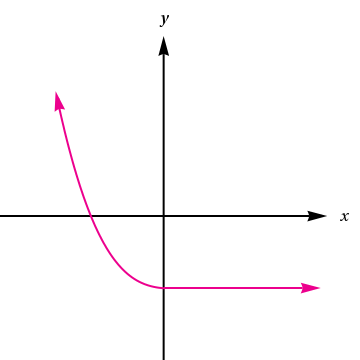
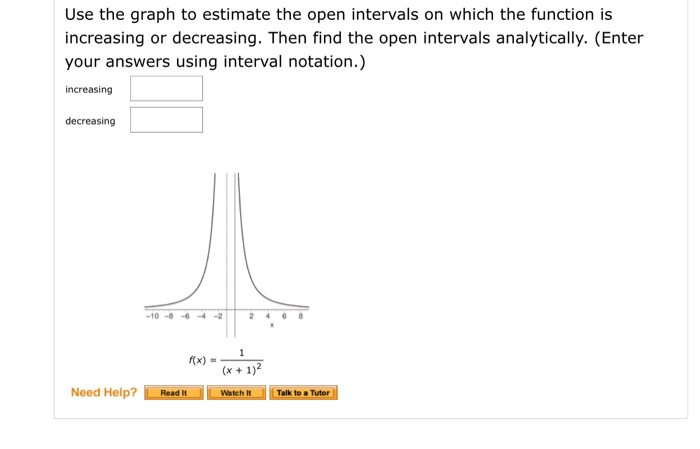
Use the graph to determine open intervals on which the function is increasing, decreasing, or constant
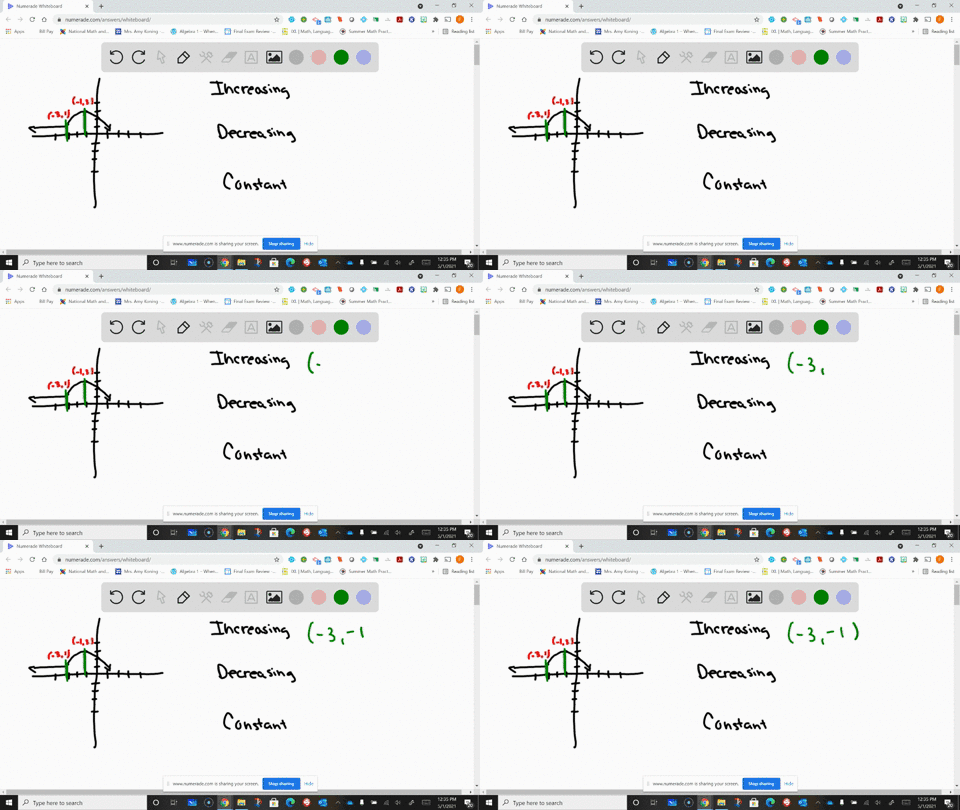
A function is defined as the change in the output value with respect to the input where the output variable is dependent upon the input variable. The question seems to be asking for the intervals of increase, decrease, and constancy for a function represented by a graph However, the graph or a clear description of the graph is not provided The function is increasing in the intervals ( − 3, − 1) and ( − 1, 2) because.
The function is increasing on the interval (−∞,0), decreasing on the interval (0,4), and constant on the interval (4,∞) Understanding these intervals is crucial in analyzing the behavior of the function Each interval represents a different behavior of the function's output relative to its input values. How to determine the intervals where a function is increasing, decreasing, or constant in this lesson, we want to learn how to determine where a function is increasing, decreasing, or constant from its graph
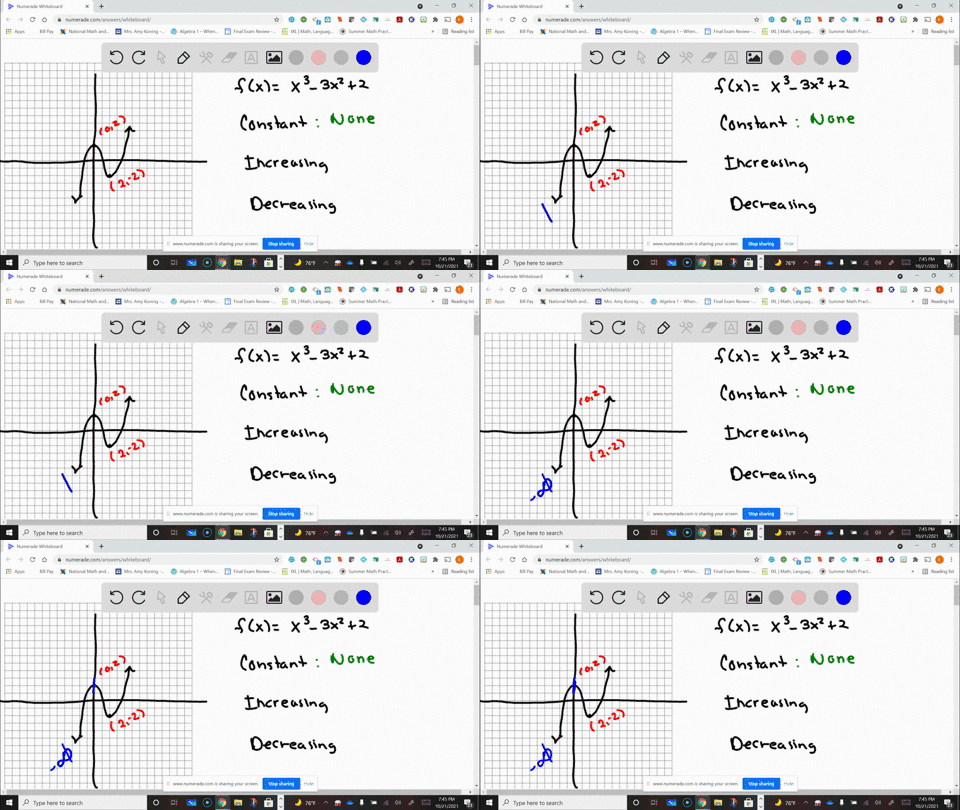
Let's begin with something simple, the linear function.
To determine the open intervals where a function is increasing, you need to analyze the graph of the function An increasing function is characterized by slopes that rise as you move from left to right The intervals where a function is increasing (or decreasing) correspond to the intervals where its derivative is positive (or negative) So if we want to find the intervals where a function increases or decreases, we take its derivative an analyze it to find where it's positive or negative (which is easier to do!).
A function is constant if the graph is horizontal 👉 learn how to determine increasing/decreasing intervals There are many ways in which we can determine whether a function is increasing or decreasing but w. One such detail would have been the distinction between saying that a function is increasing on an interval and saying that that is a maximal interval, in the sense that there is no containing interval (open or closed) on which it is increasing
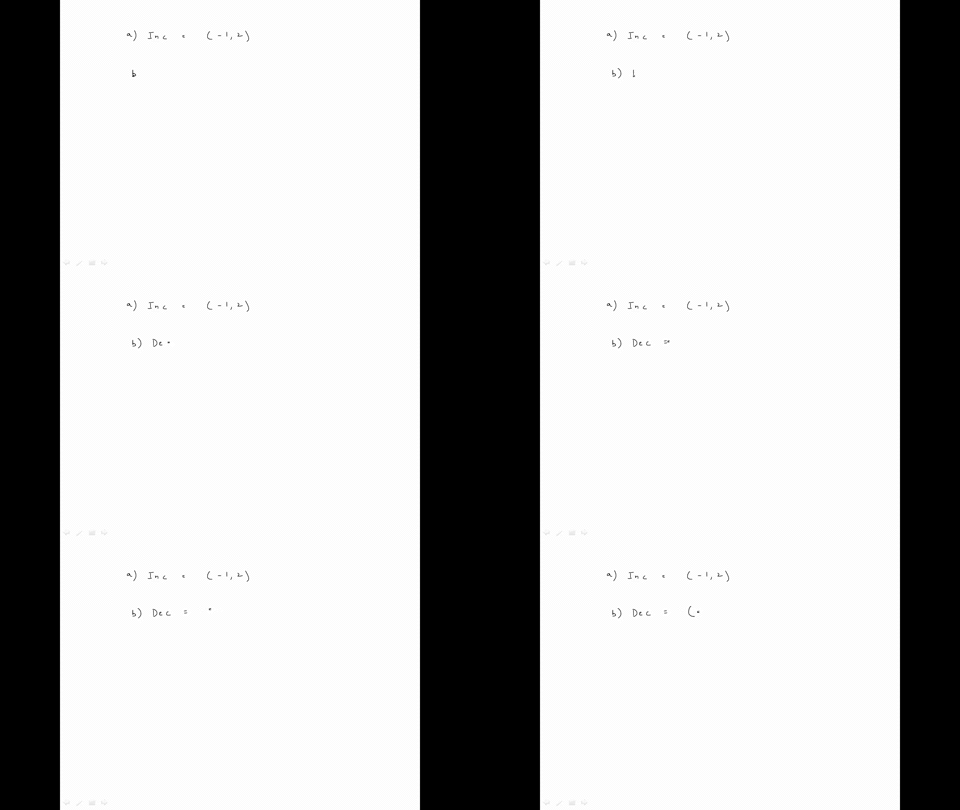
In my experience, texts leave a lot unstated.
To determine the intervals over which a function is increasing, decreasing, or constant, we first analyze the function's behavior based on its derivative, if available, or its graph. After locating the critical number(s), choose test values in each interval between these critical numbers, then calculate the derivatives at the test values to decide whether the function is increasing or decreasing in each given interval. * **why are open intervals important when discussing increasing functions?** think about it In this video we go through 5 examples showing how to write where the graph is increasing, decreasing, or constant in interval notation.* organized list of m.
This video goes through how to determine where the increasing, the decreasing, and the constant intervals are of a function working several examples. Let f be an increasing, differentiable function on an open interval i, such as the one shown in figure 3 3 2, and let a <b be given in i The secant line on the graph of f from x = a to x = b is drawn It has a slope of (f (b) f (a)) / (b a).
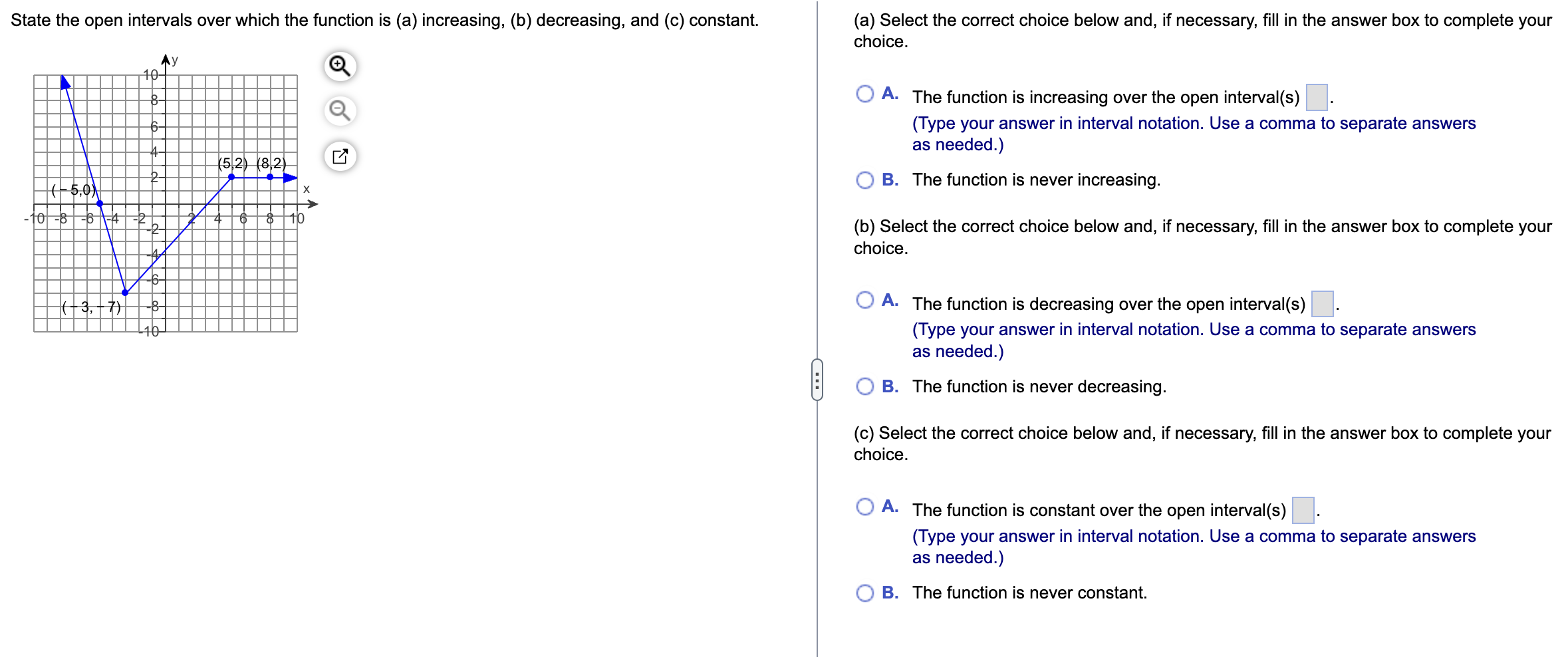
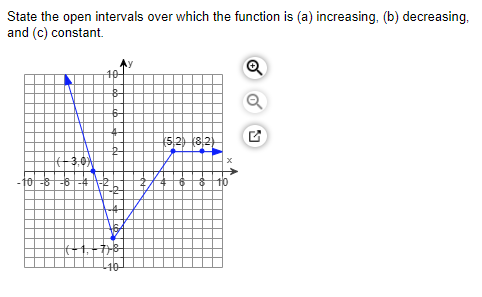
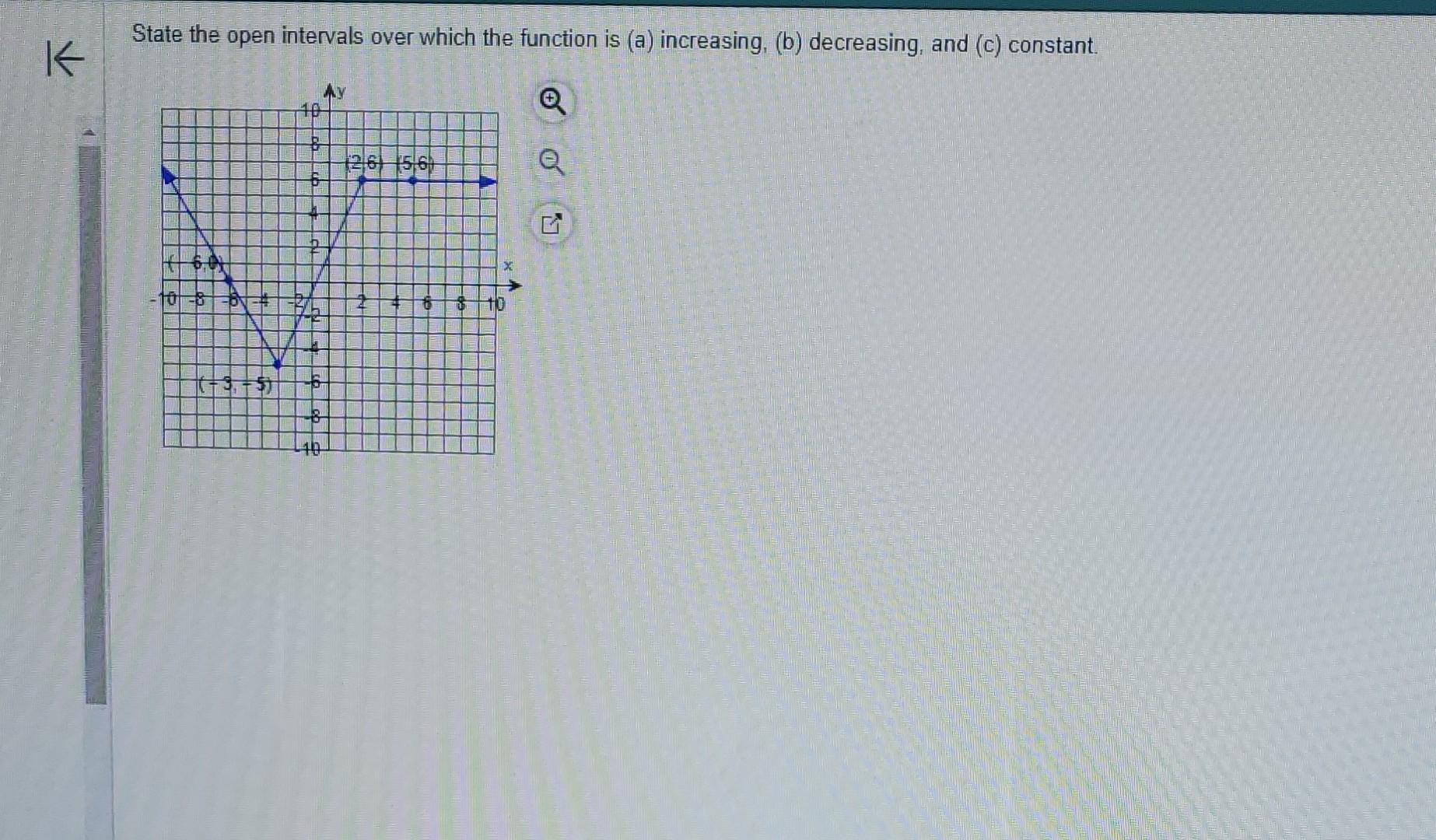
State the open intervals over which the function is (a) increasing, (b) decreasing, and (c) constant
(a) select the correct choice below and, if necessary, fill in the answer box to complete your choice. Select the correct choice below and, if necessary