Vector Force Definition 2026 Vault Vids & Pics Get Now
Begin Immediately vector force definition select content delivery. No strings attached on our digital collection. Dive in in a large database of themed playlists on offer in high definition, perfect for passionate streaming patrons. With the newest additions, you’ll always keep current. Check out vector force definition specially selected streaming in amazing clarity for a absolutely mesmerizing adventure. Get involved with our creator circle today to stream exclusive prime videos with without any fees, access without subscription. Benefit from continuous additions and venture into a collection of special maker videos conceptualized for premium media followers. Don't pass up rare footage—start your fast download! Get the premium experience of vector force definition bespoke user media with lifelike detail and hand-picked favorites.
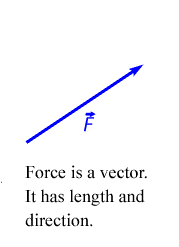
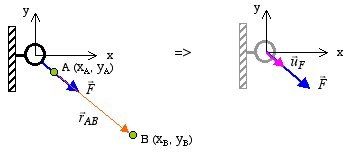
A force vector is defined as a quantity that possesses both magnitude and direction, representing forces applied in a specific direction, often referred to in biomechanics as a load vector Unlike scalar quantities, which only have magnitude, vector forces require both to be fully defined. Ai generated definition based on
Force Vector Diagram Show Physic Science Stock Vector (Royalty Free
In physics, a force is an action that can cause an object to change its velocity or its shape, or to resist other forces, or to cause changes of pressure in a fluid A vector force definition describes a force that has both magnitude and direction In mechanics, force makes ideas like ' pushing' or ' pulling' mathematically precise
Because the magnitude and direction of a force are both important, force is a vector quantity (force vector)
The si unit of force is the newton. Vectors and units introduction vectors and units are core tools for describing the physical world in a precise, quantitative way A vector is a quantity that has both **magnitude** (how big) and **direction** (which way) Many important physical quantities are vectors
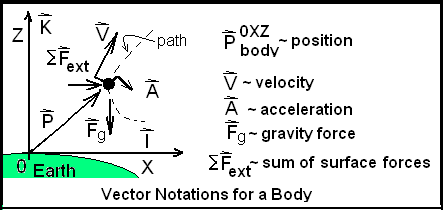
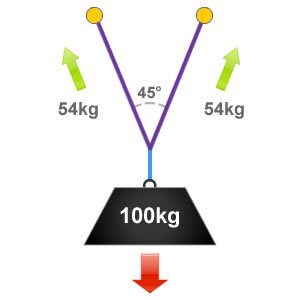
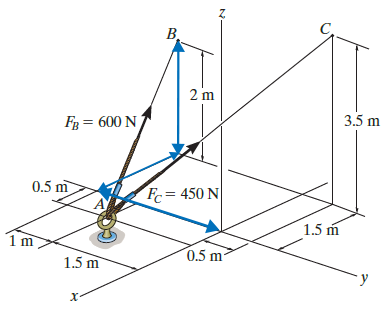
Displacement, velocity, acceleration, and force all need both size and direction to be completely specified A force vector is a mathematical representation of a force that includes both the magnitude (size) and direction of the force acting on an object It is a fundamental concept in physics that describes the combined effect of multiple forces acting on a body. When two forces act on a point particle, the resulting force or the resultant (also called the net force) can be determined by following the parallelogram rule of vector addition
The addition of two vectors represented by sides of a parallelogram gives an equivalent resultant vector which is equal in magnitude and direction to the transversal.
Force is a vector quantity since it has both magnitude and direction The effect of a force on the motion of an object is independent of which body applies the force For instance, an identical motion results from a force by someone pushing on a box or an equal force applied by a machine pulling on the box figure 6.11. The newton force is a quantity that is measured using the standard metric unit known as the newton
A newton is abbreviated by an n. to say 10.0 n means 10.0 newton of force Thus, the following unit equivalency can be stated 1 newton = 1 kg • m/s2 force is a vector quantity a force is a vector. With force vectors you can now understand all kinds of force effects
Whether it's pushing a box, throwing a ball or driving a car
In physics, vectors are often represented by bold letters So the force vector becomes f, the weight force becomes g and so on Sure, sometimes it's helpful to represent forces as arrows or bold letters But most of the time it's enough to simply use.